
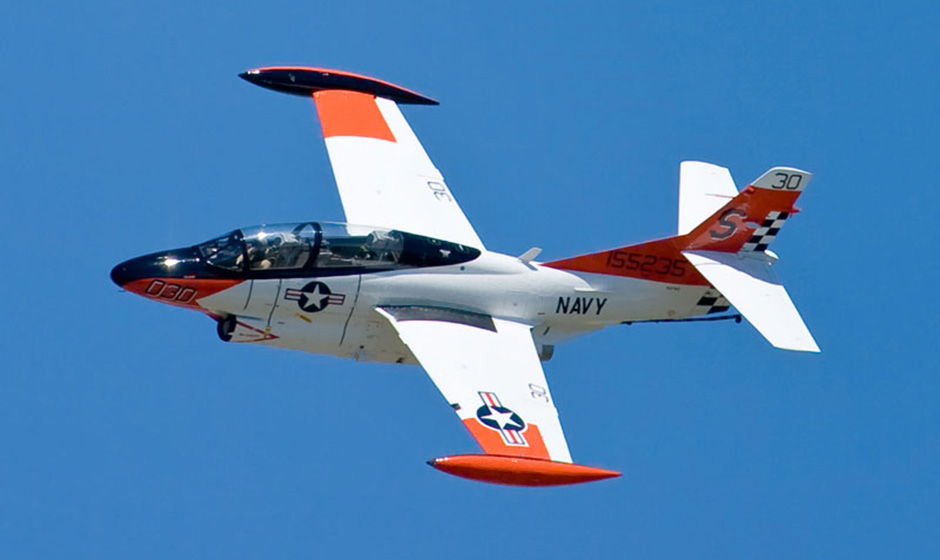
T-2B Buckeye
Military History
In 1956, the U.S. Navy awarded a contract to North American Aviation to design and build a new jet trainer aircraft, which would come to be known as the T-2 Buckeye. The T-2 was to be used for basic and advanced air combat and carrier operations training. Over the years there would be two major modifications to the original T-2A design, the T-2B, and the T-2C.
The early model T2-J1s (or T-2A's) entered service in July of 1959. The first cadets to carrier qualify in a T-2A did so aboard the aircraft carrier U.S.S. Antietam (CV-36) on June 2, 1960.
The first of the upgraded T-2B's, now equipped with two engines to have their performance match more closely with the jet fighters of the day, entered service in December of 1965. The first T-2B carrier landing by a student was on September 2, 1966 on the aircraft carrier U.S.S. Lexingtion (CV-16).
The third and final major modification came as the T-2C was introduced in 1968 with General Electric J85-GE-4 engines.
The last T-2 carrier landing was that of a T-2C on July 25, 2003, aboard the aircraft carrier U.S.S. Harry S. Truman (CVN 75).
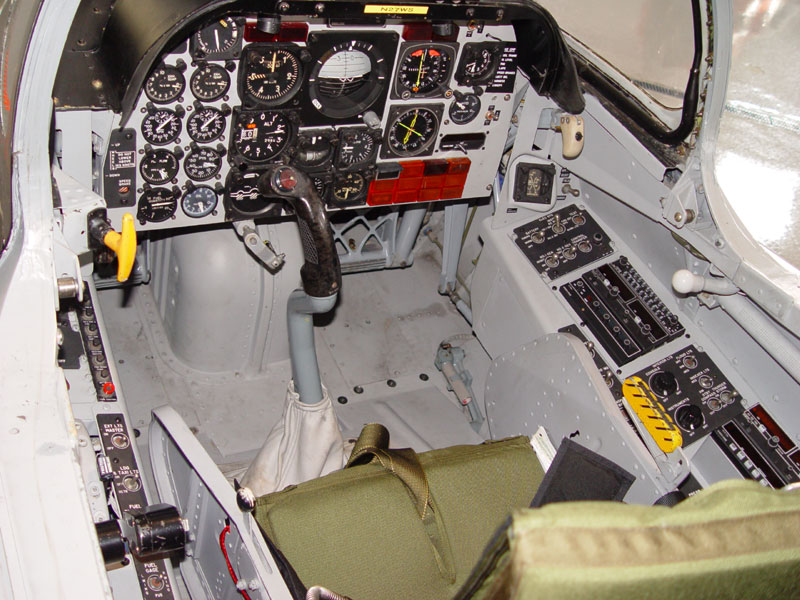
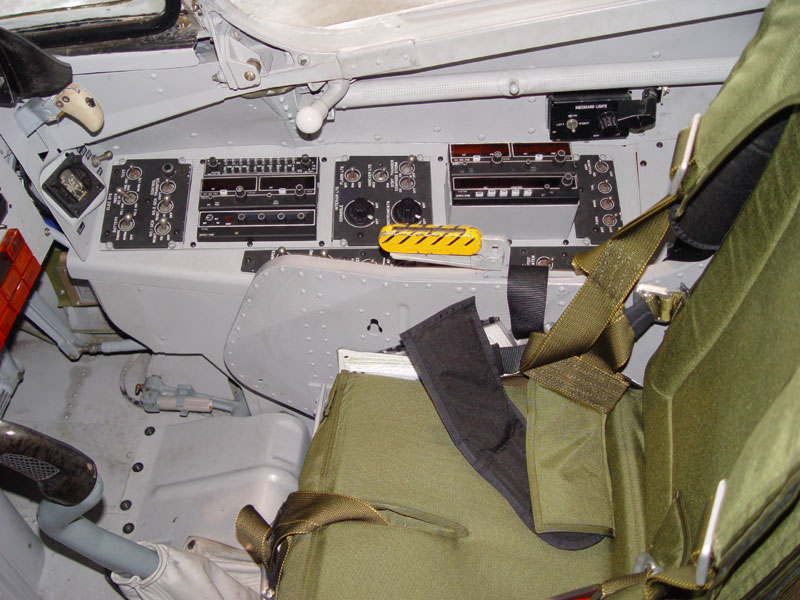
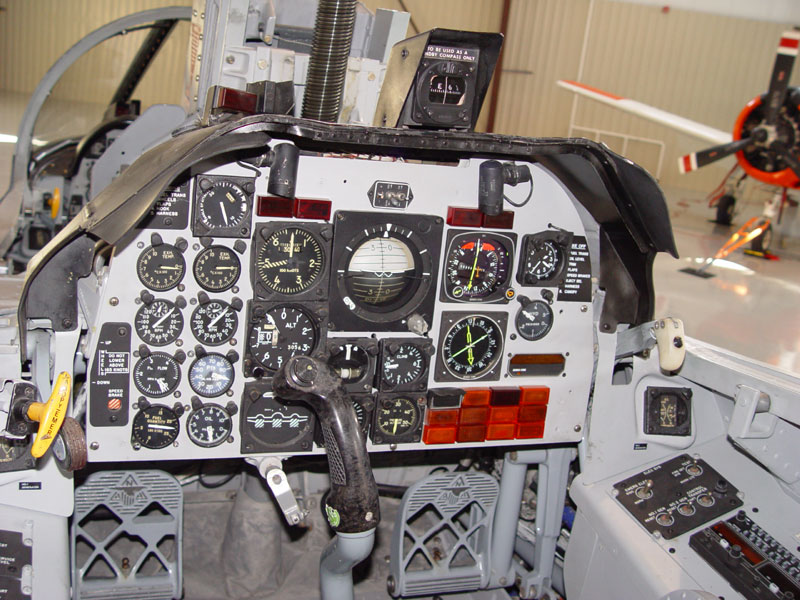
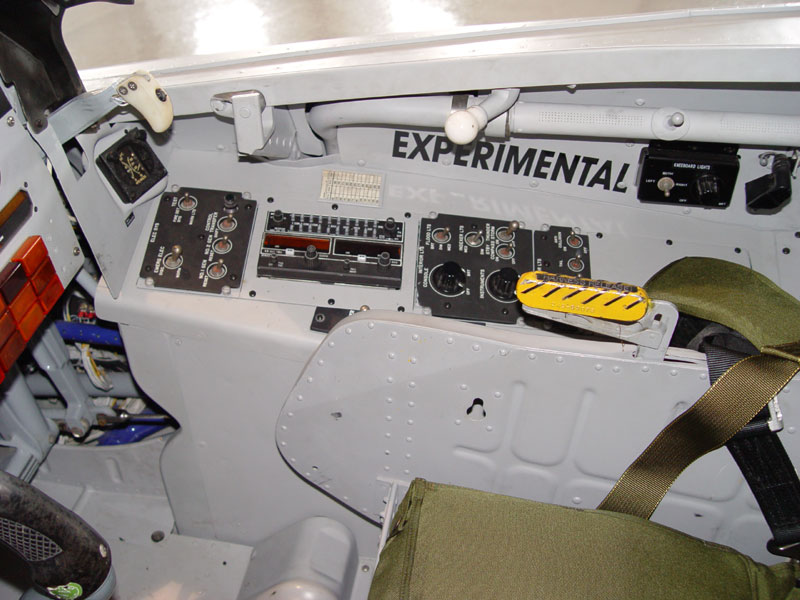
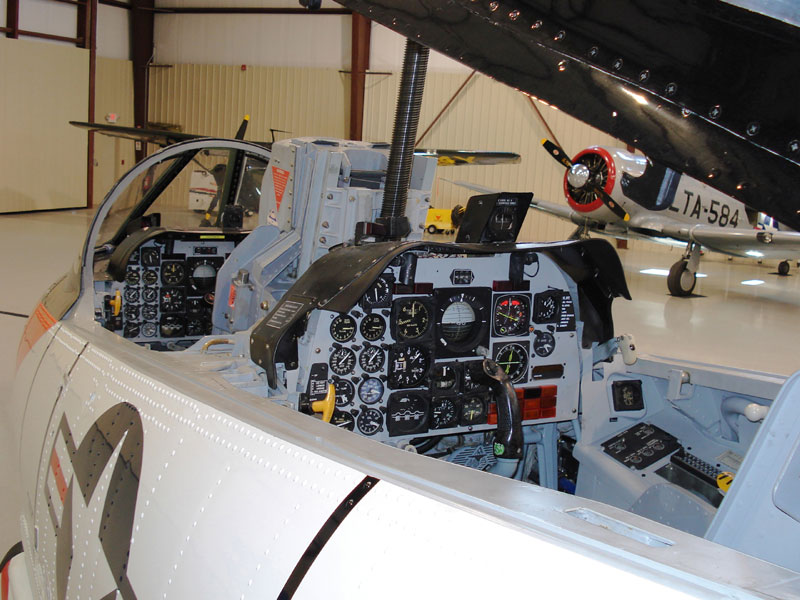
A total of 609 T-2 aircraft were built. The T-2, although an excellent training aircraft, has a completely analog cockpit, and as such it has been phased out by the U.S. Navy in favor of the T-45 Goshawk, which has a state-of-the-art digital cockpit and has perfomance that closely matches modern fighter aircraft. The T-2 is stil in service with the Hellenic (Greek) Air Force and possibly the FAV (Venezuelan Air Force).
Read more information on the T-2B Buckeye from the free online resource 'Wikipedia'.
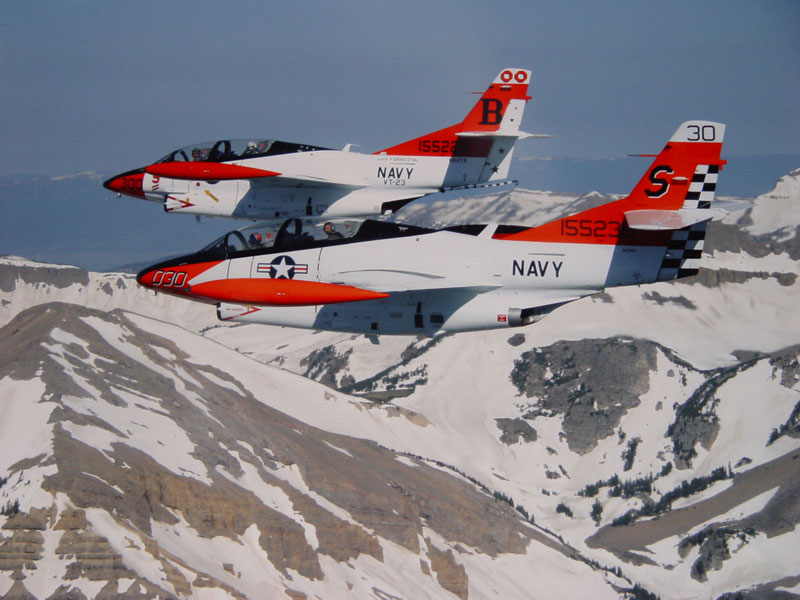
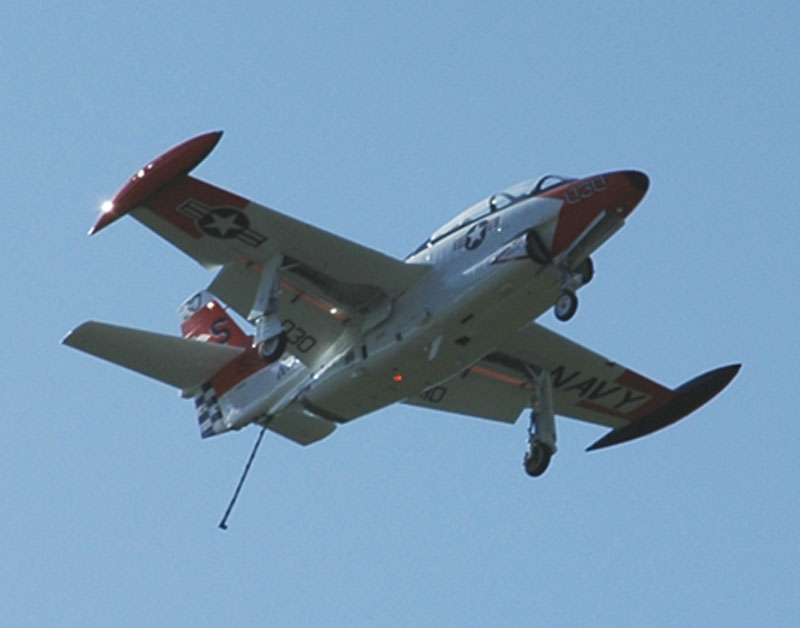
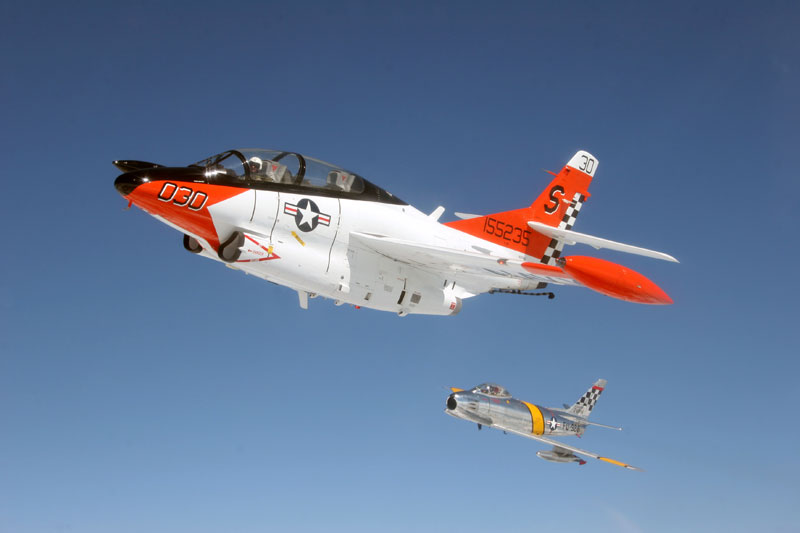
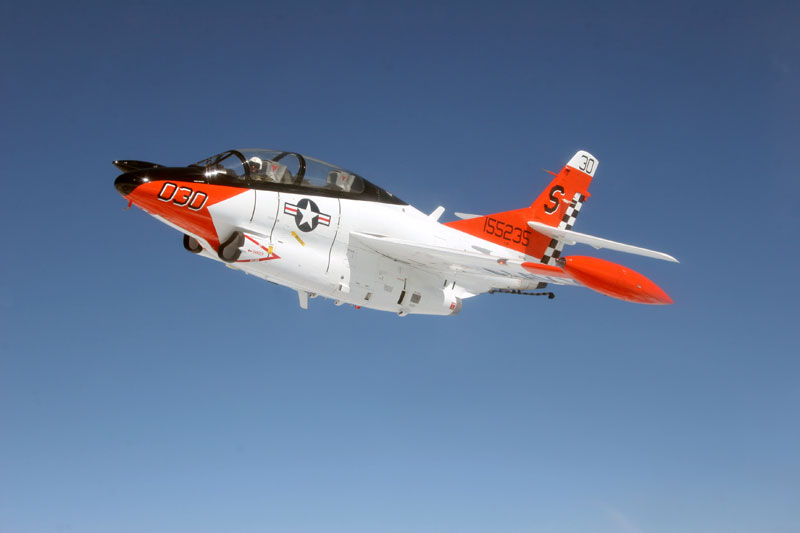
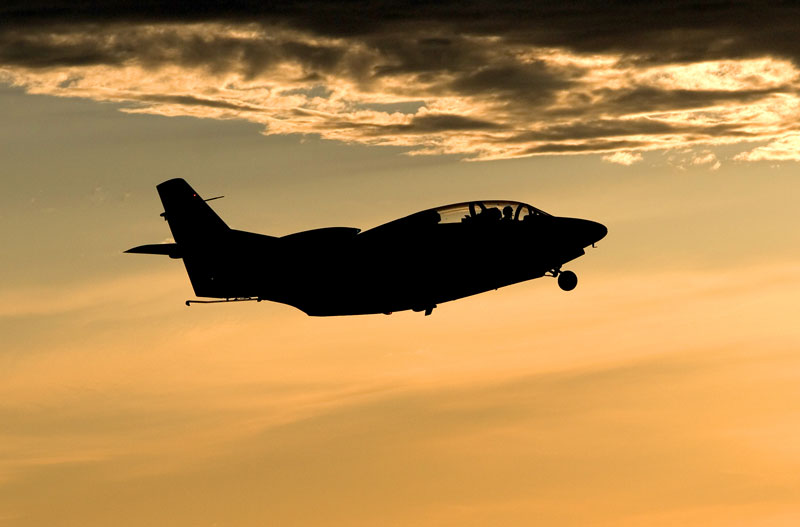
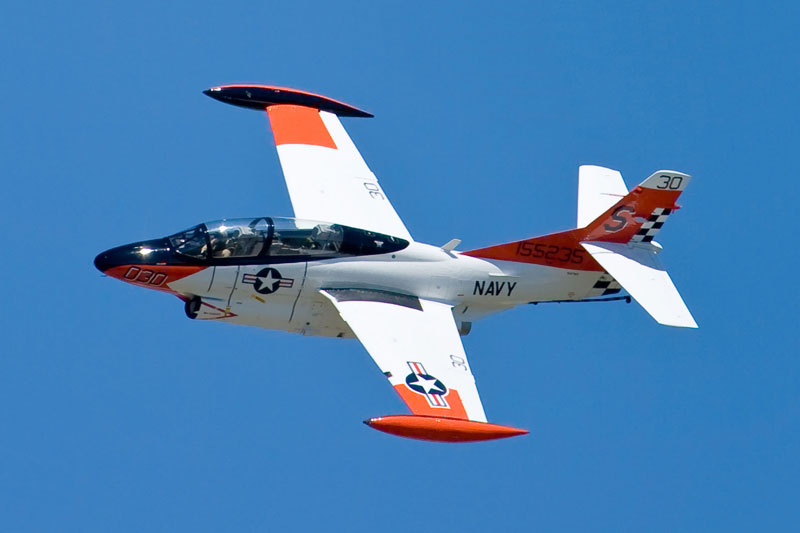
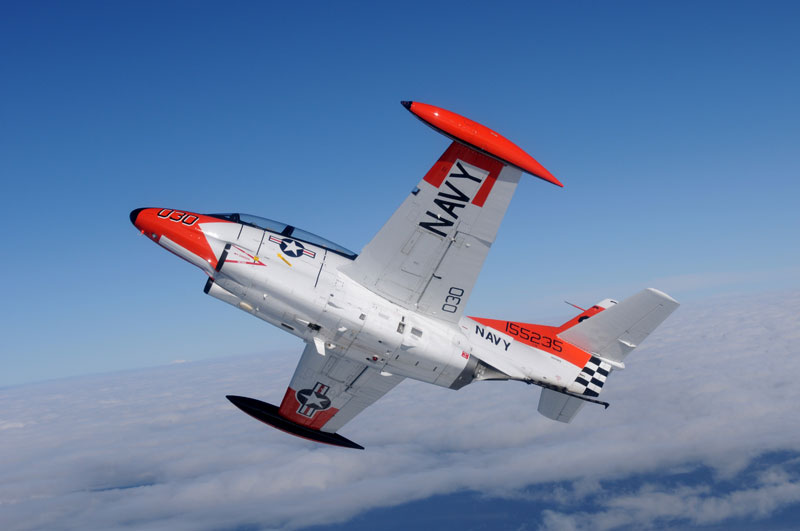
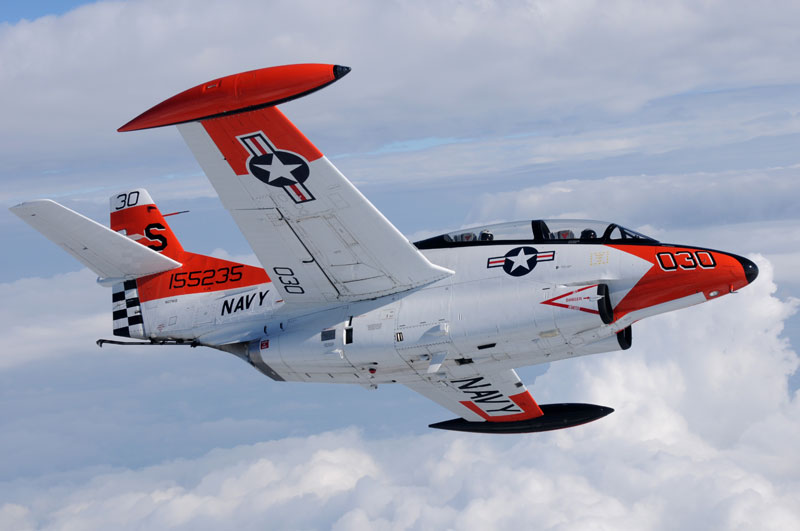
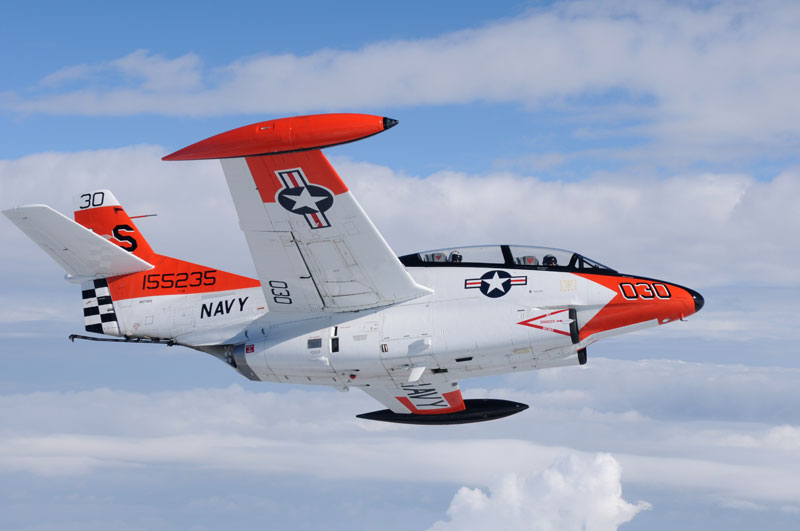
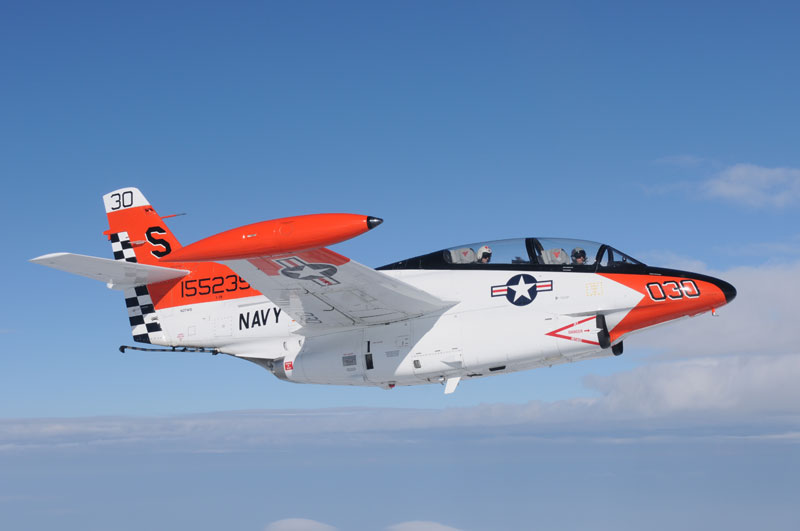
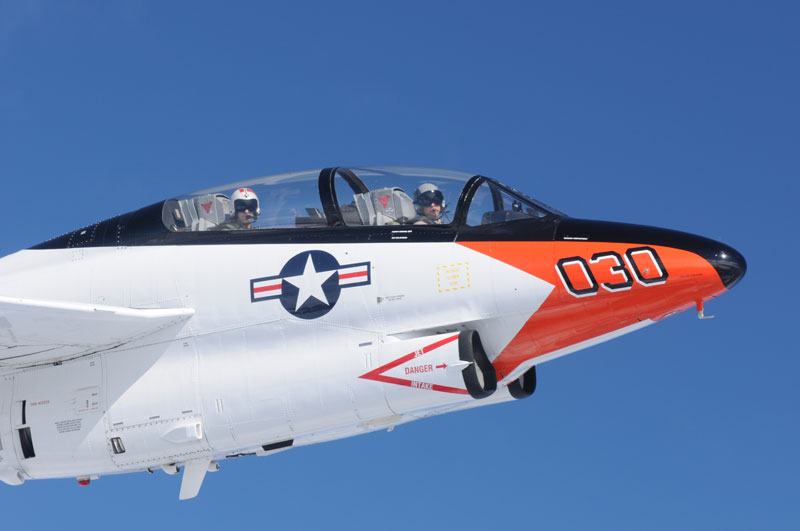
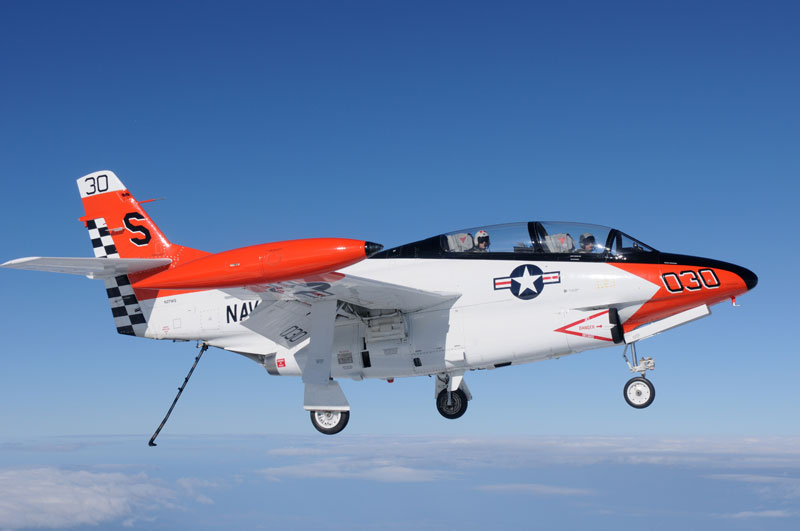
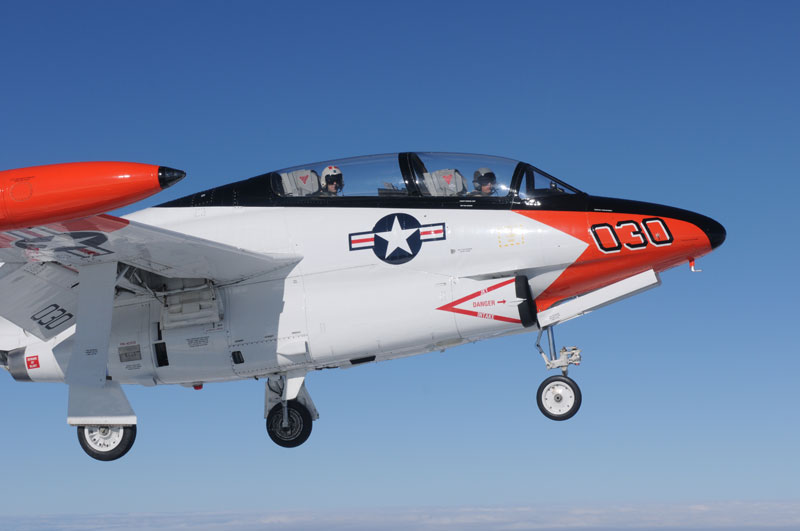
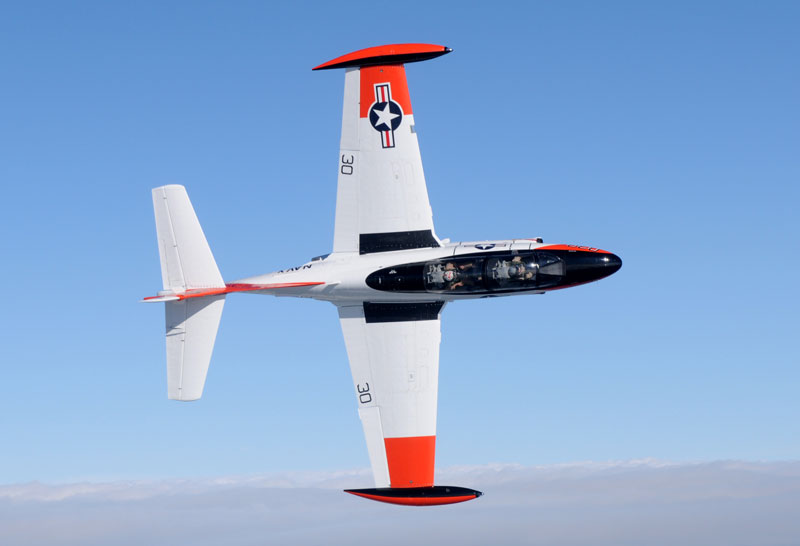
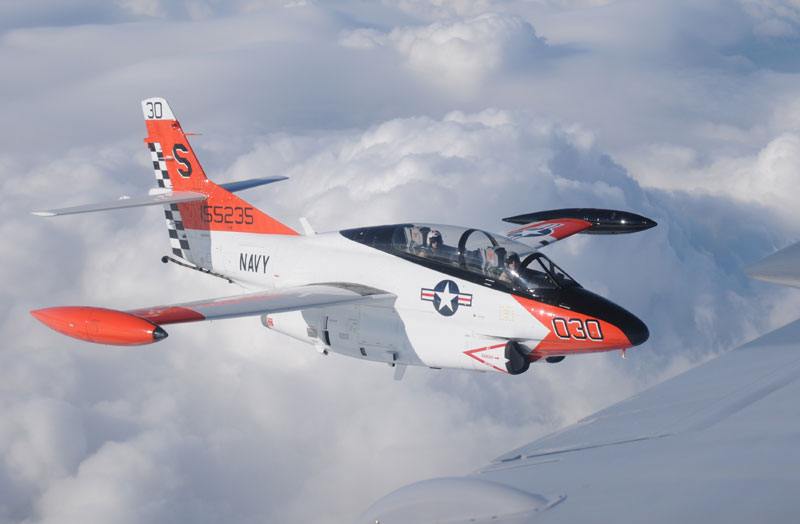
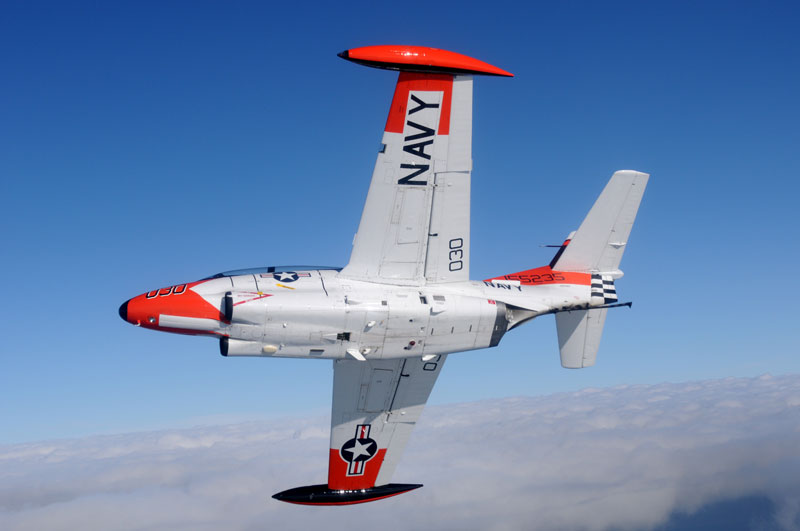
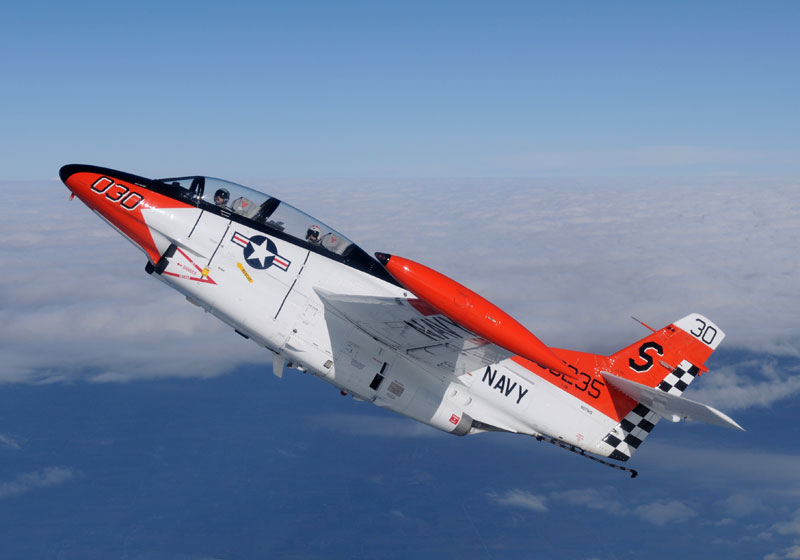
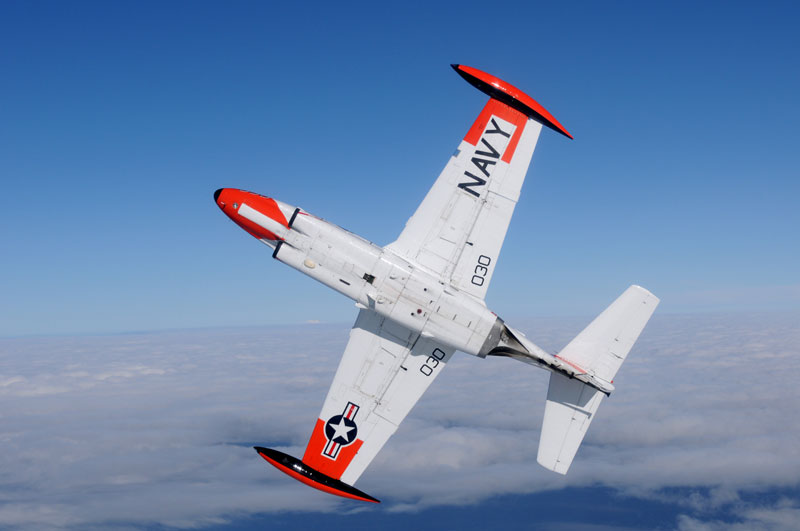
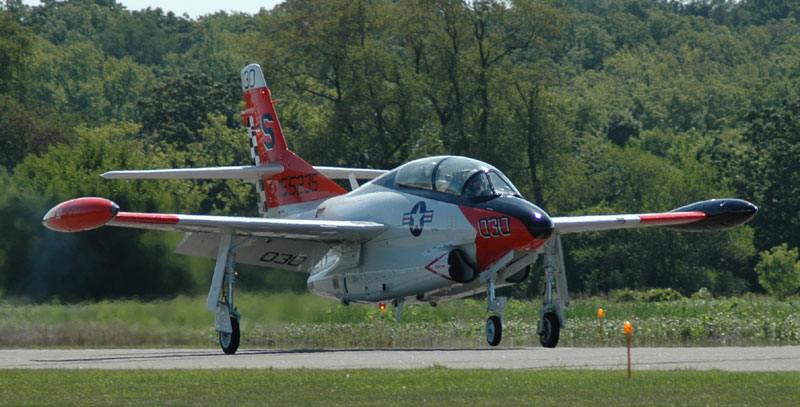
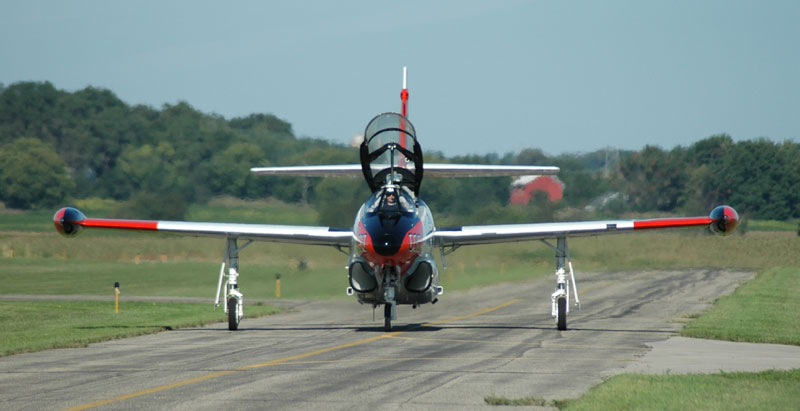
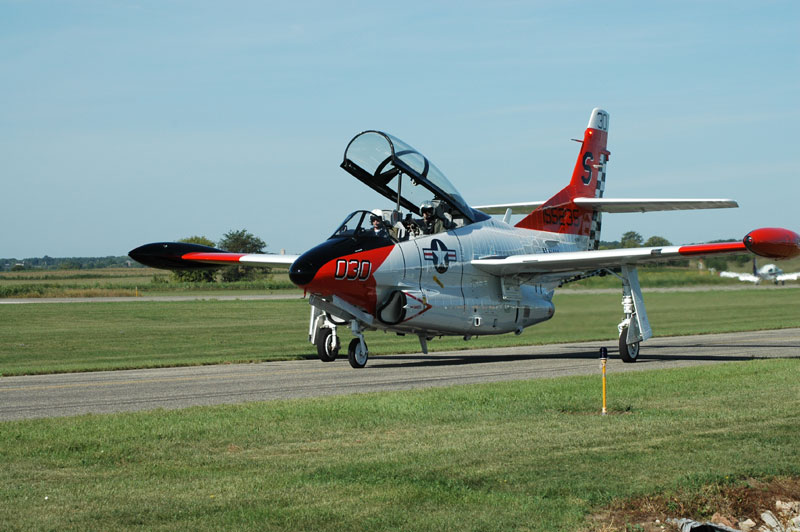
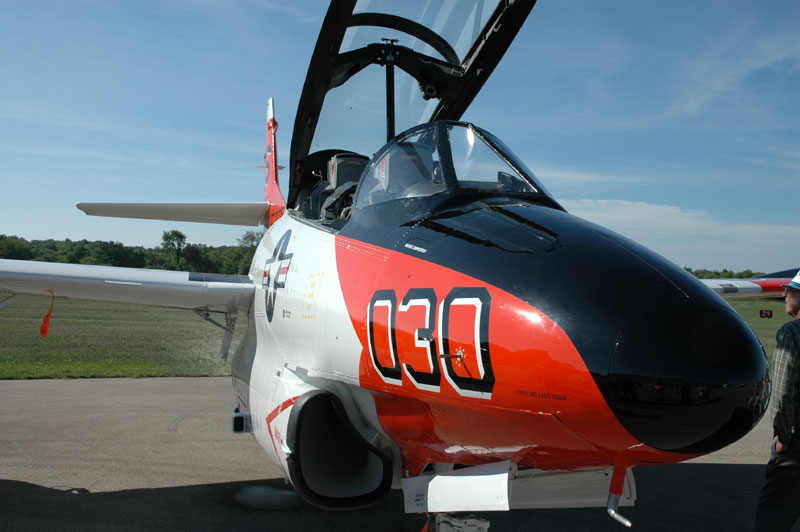
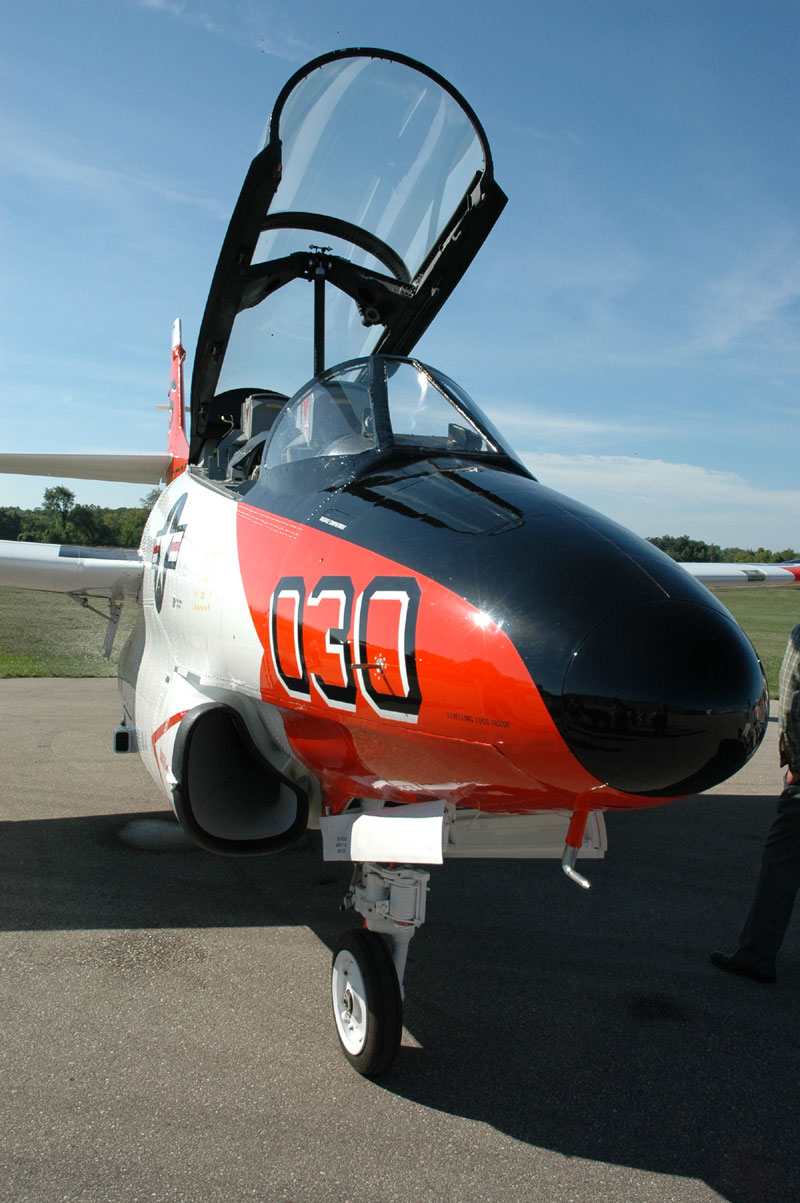
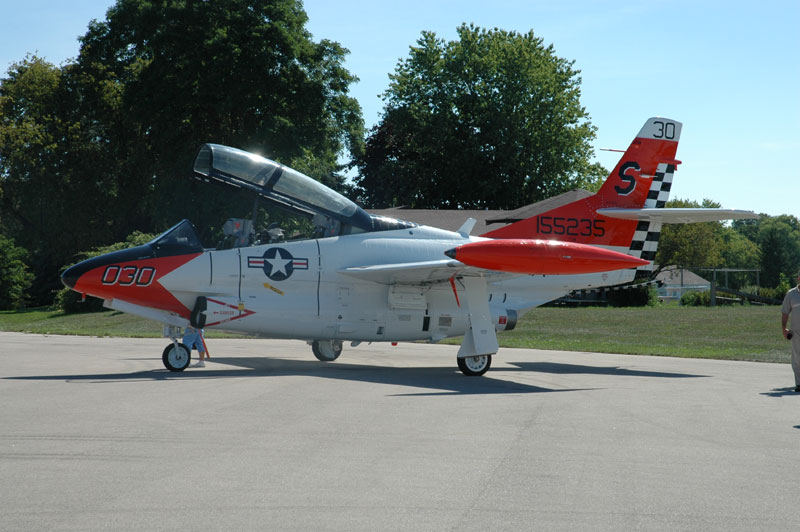
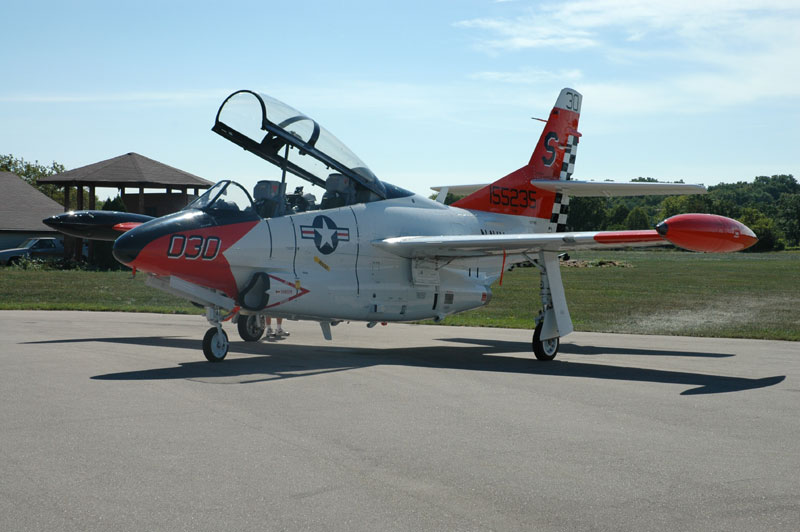
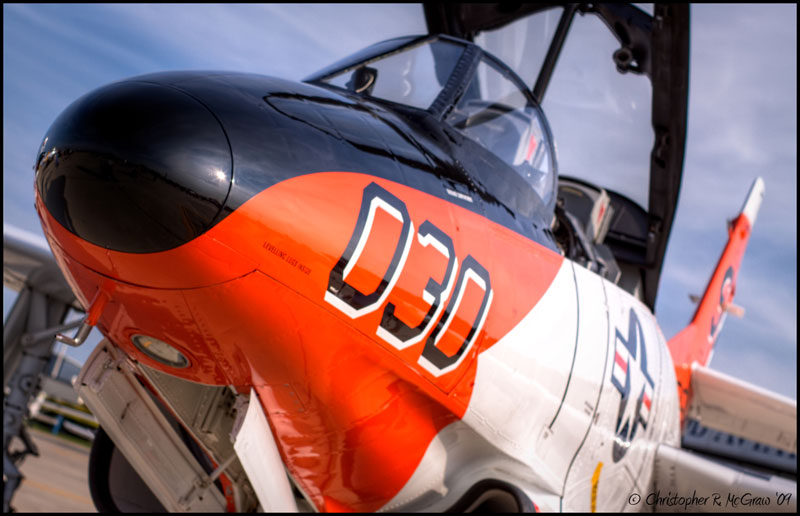
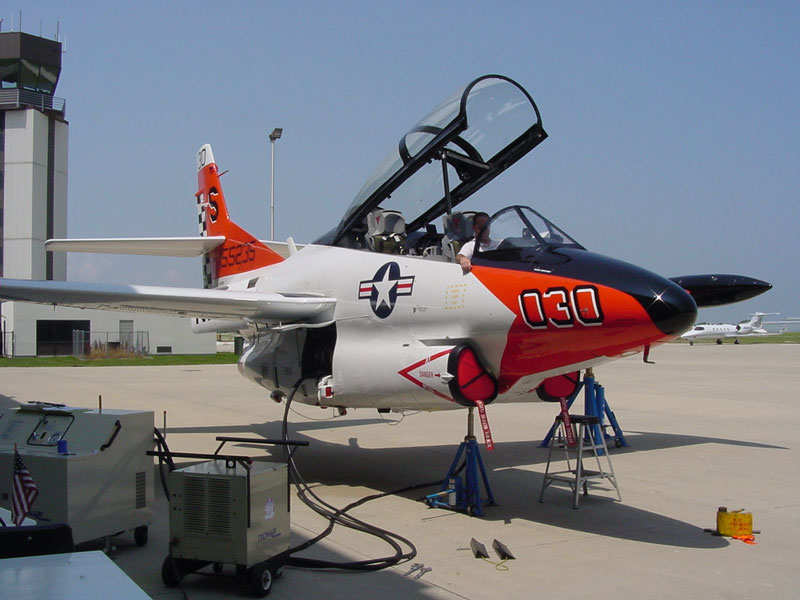
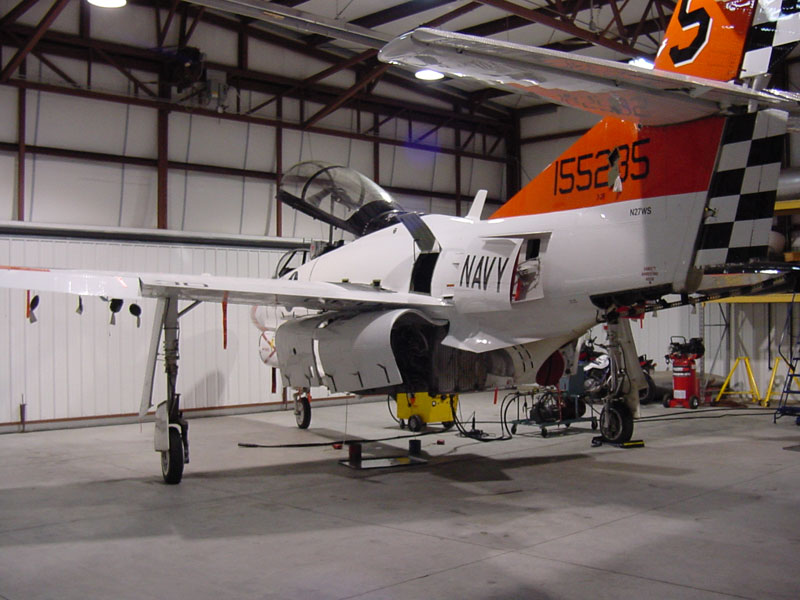
T-2B - Constr #: 310-030 - BuNo: 155235 (U.S. Navy, U.S. Marine Corps)
The known history of this aircraft is listed below.
| Date | Squadron | Squadron Name | Location |
|---|---|---|---|
| 1968 Oct 30 | Acceptance | Columbus, OH | |
| 1968 Oct 30 | Traron Four | NAS Pensacola, FL | |
| 1969 Mar 26 | Traron Nine | NAS Meridian, MS | |
| 1969 Jul 15 | Traron Four | Carrier Arrested Landings: 35 | NAS Pensacola, FL |
| 1970 Jul 30 | Traron Nine | Carrier Arrested Landings: 3 | NAS Meridian, MS |
| 1973 Oct 16 | Traron Ten | NAS Pensacola, FL | |
| 1975 Sep 19 | HQ USMC | FLT Section | Andrews AFB, MD |
| 1976 Nov 2 | MASDC - Storage | Davis-Monthan AFB, AZ | |
| 1977 Aug 19 | Stricken from Inventory Code 3 - Admin | Hrs Flown: 3,305 Landings: 1,060 | |
| .... | .... | ||
| Mid 1990's -2002 | Sanders Aviation - Alabama - Restored by Victoria Air Maintenance, LTD - Sidney, BC, Canada | ||
| 2004 | Warbird Heritage Foundation |
SPECIFICATIONS
| Manufacturer: | North American Rockwell |
| Model: | T-2B |
| Year Built: | 1968 |
| Constr # / Plant: | 310-030 / Columbus, OH |
| BuNo: | 155235 (U.S. Navy, U.S. Marine Corps) |
| N-Number: | N27WS |
| Engines: | Two |
| Pratt and Whitney J60-P-6 Turbojet | |
| Thrust: 3,000 lbs. each | |
| Length: | 38 ft. 8 in. |
| Height: | 14 ft. 9.5 in. |
| Wingspan: | 38 ft. 2 in. |
| Weight: | Empty: 8,115 lbs. |
| Max Takeoff: 13,180 lbs. | |
| Performance: | Range: 910 miles |
| Ceiling: 44,000 ft. | |
| Max Speed: 521 MPH |
GALLERY
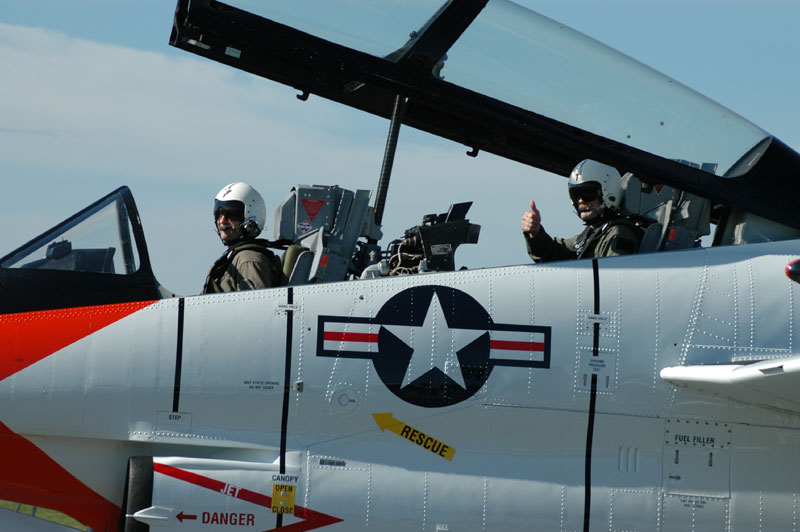
Explore the photos of our aircraft on this page by clicking the play arrow, or click on the square in the upper right hand corner to go to full screen. Once on the page, click play. To return to this page, click upper right hand button again. In full screen mode, you can double click the image to get a close-up view.
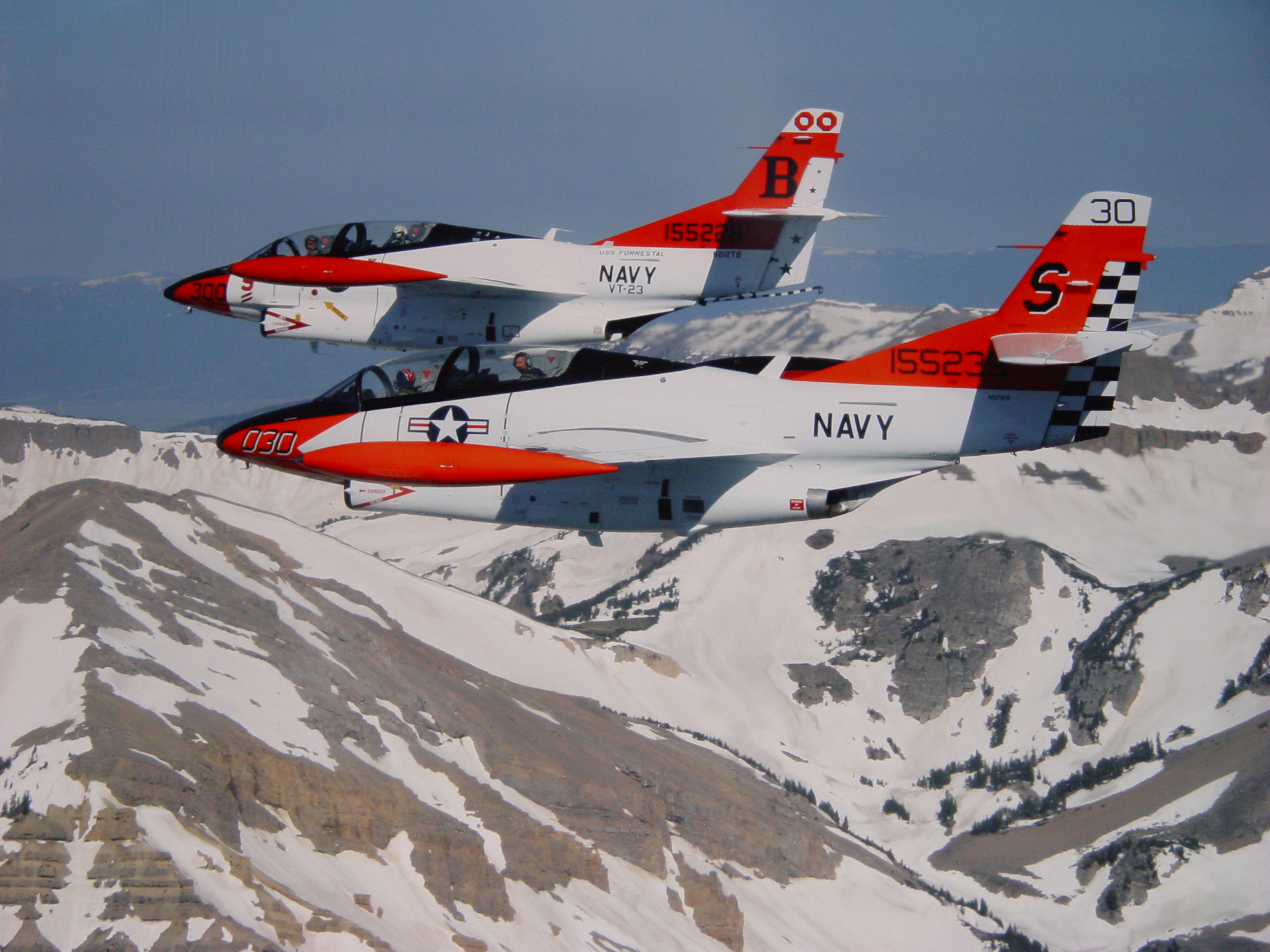
In-Flight Photos
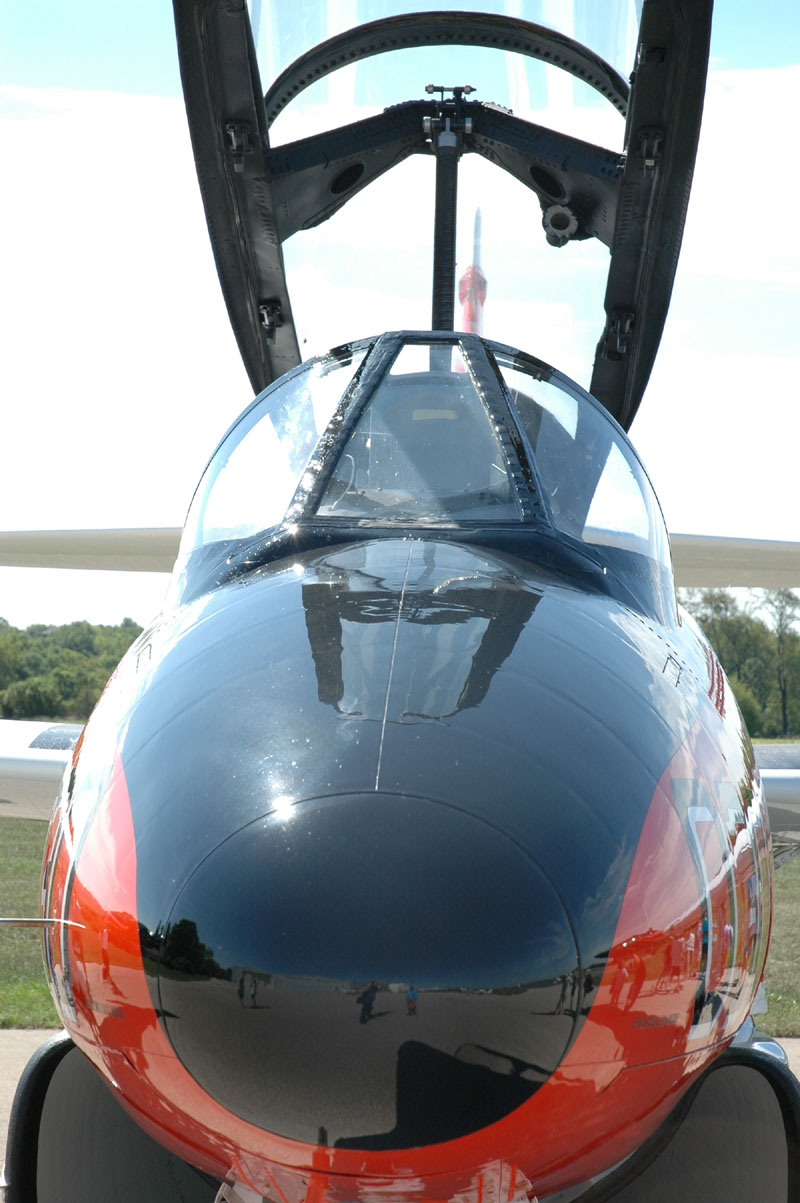
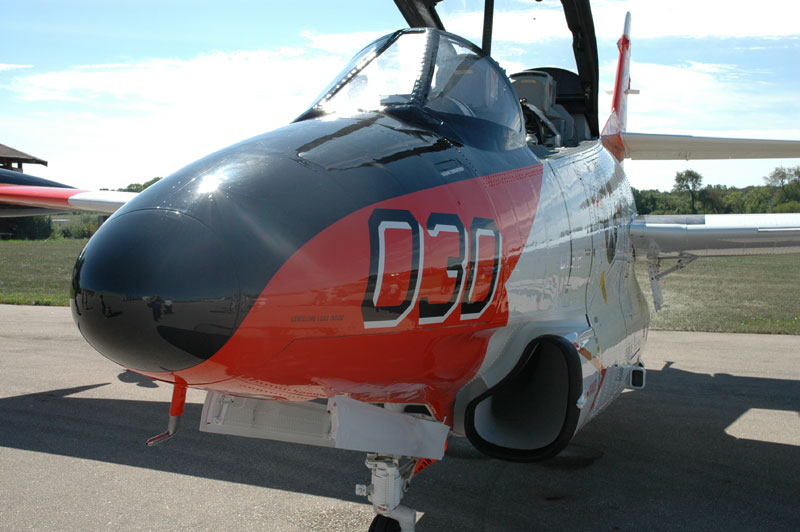
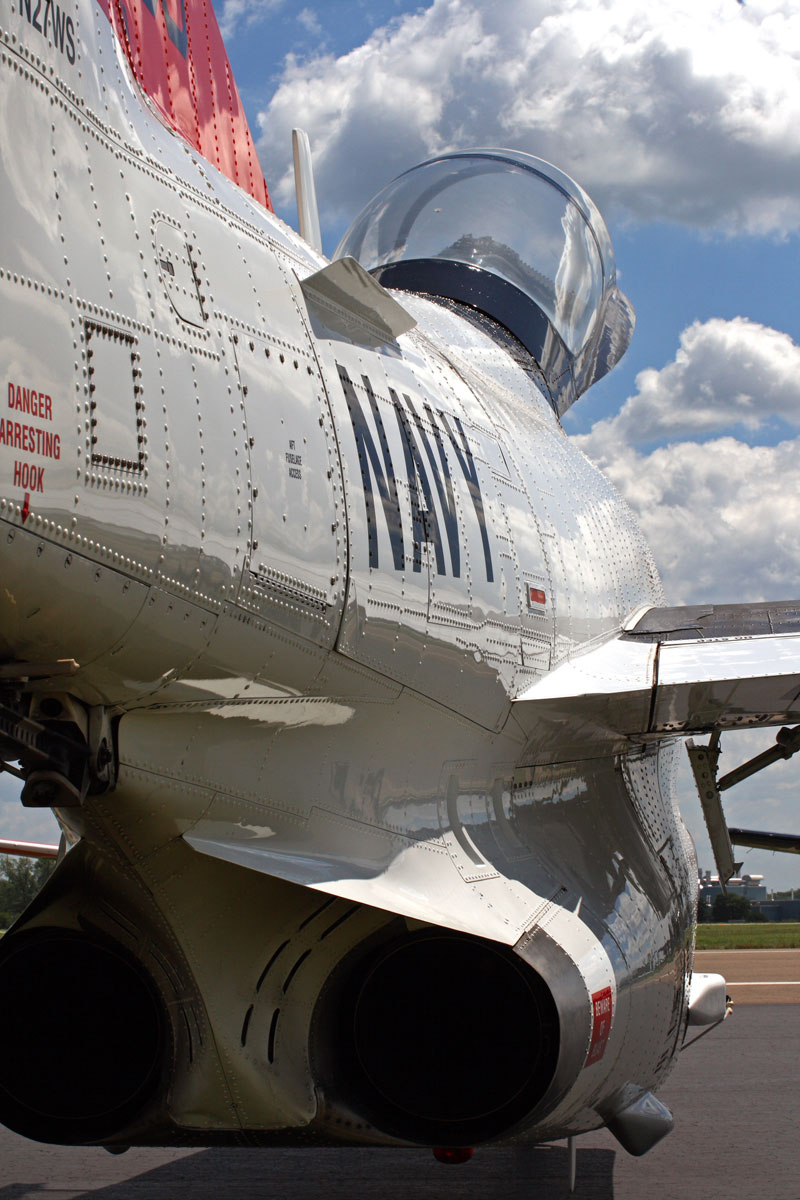
Exterior and Interior Photos
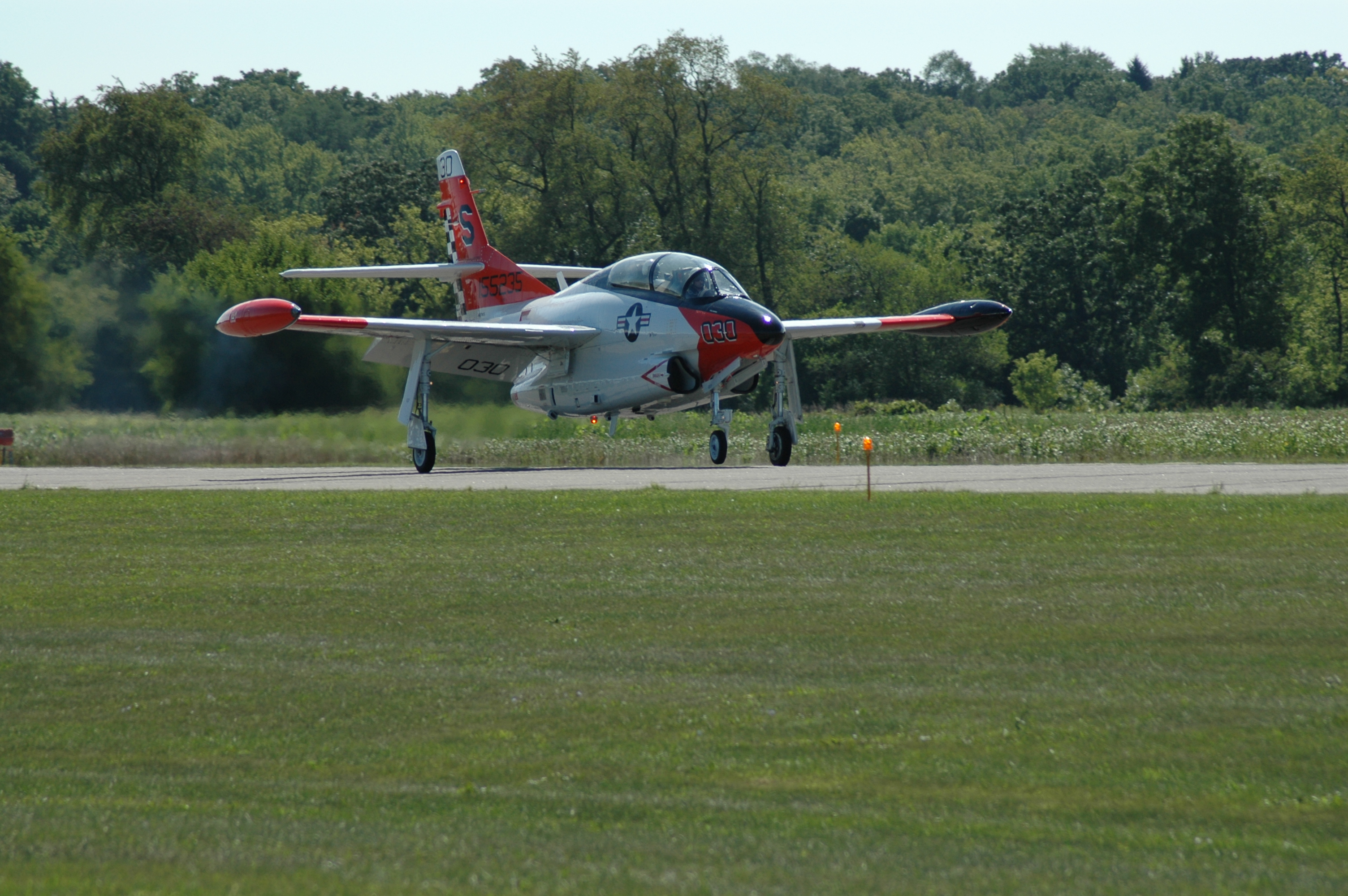
Photo by Dwight Beuthling
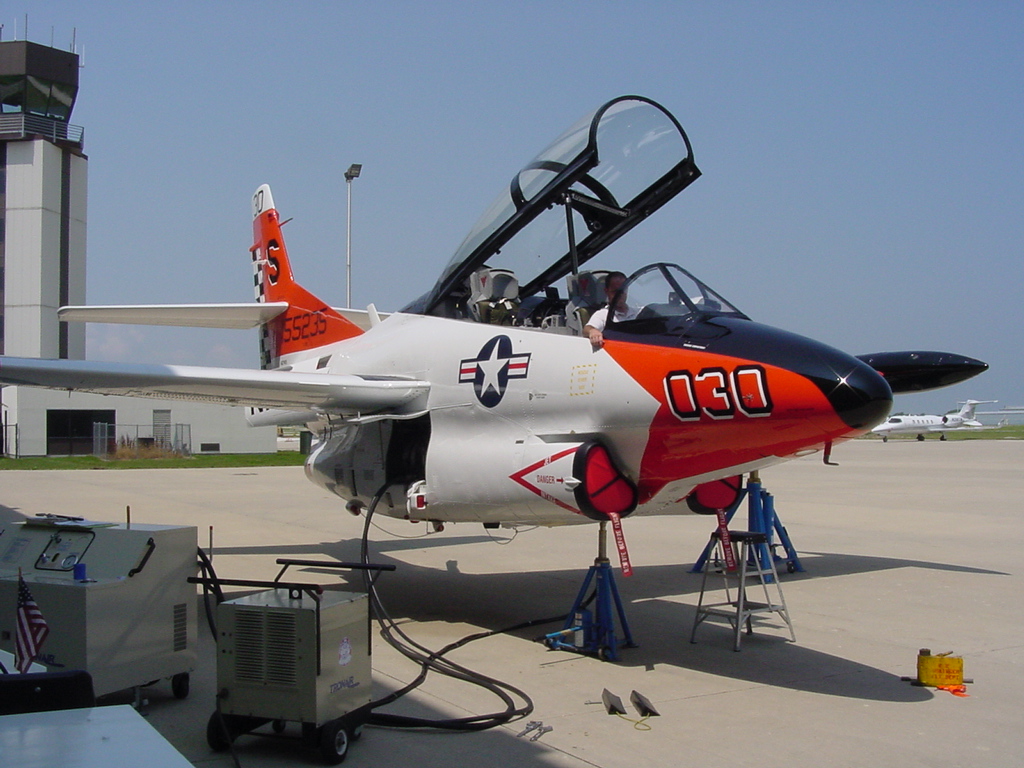
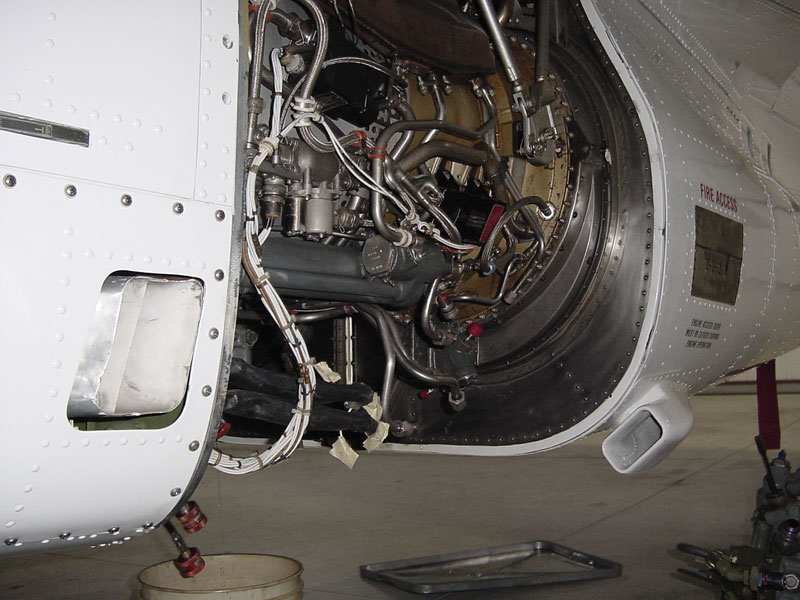
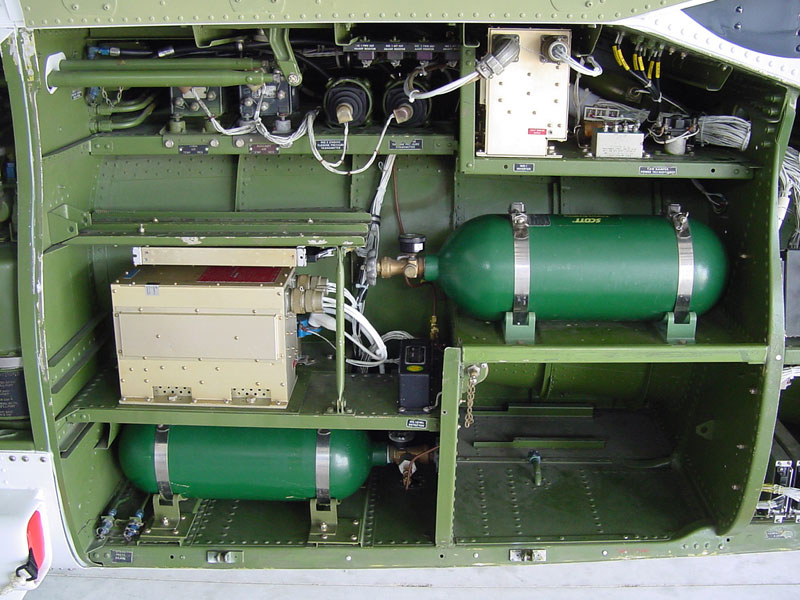
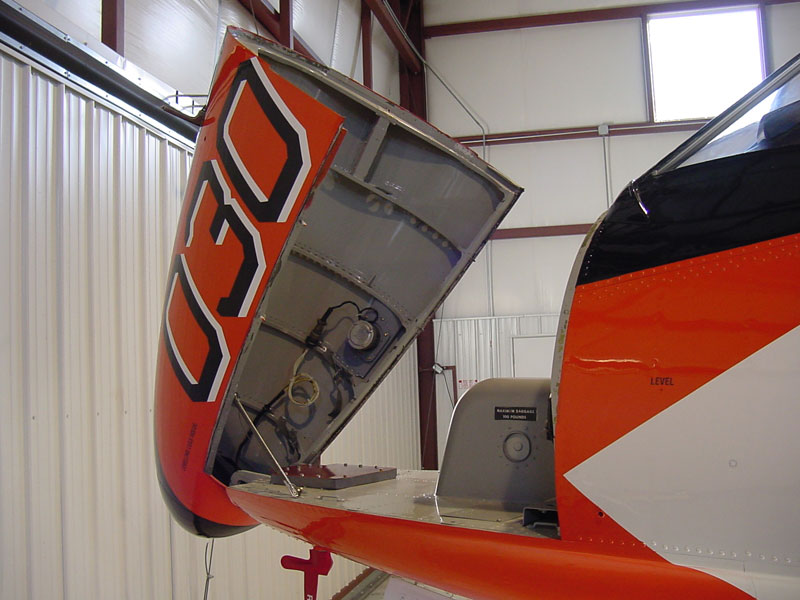
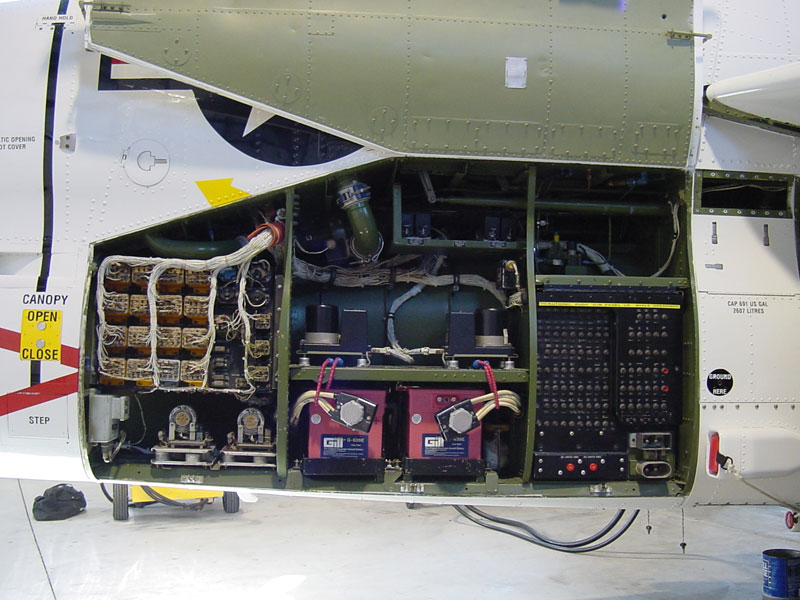
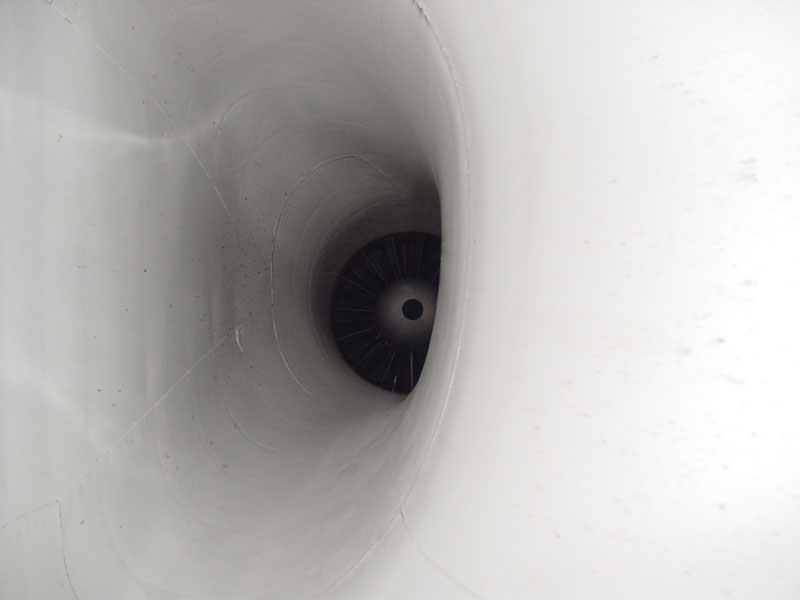
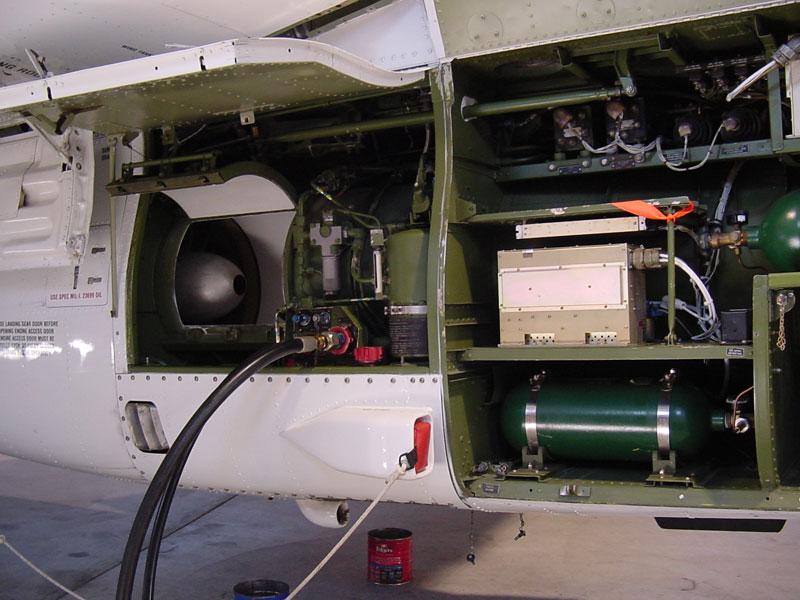
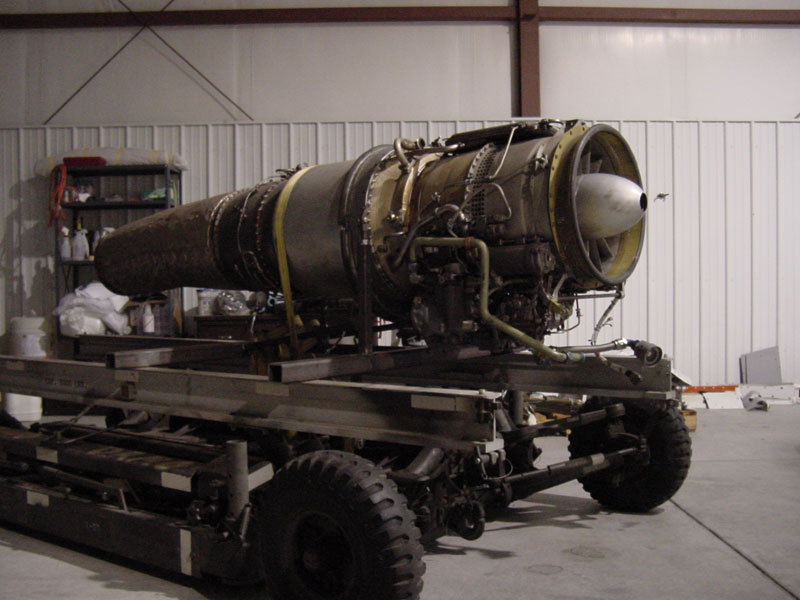
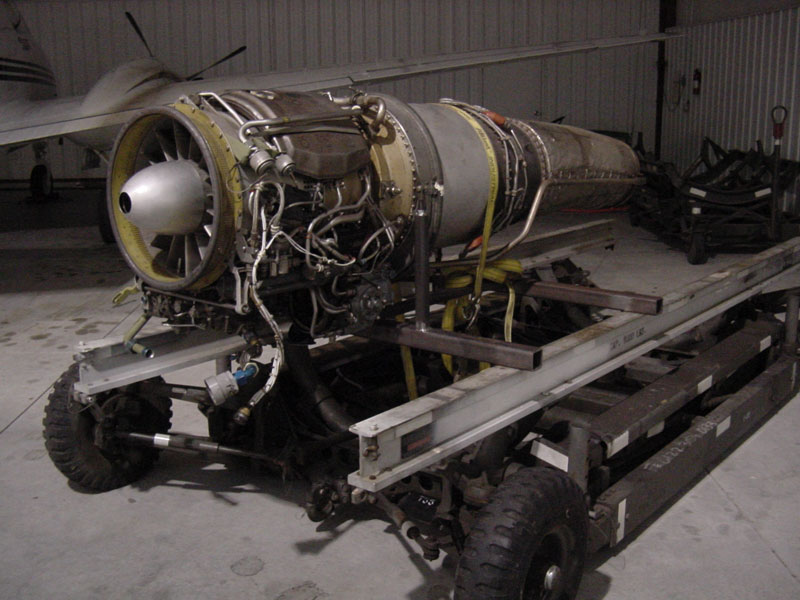
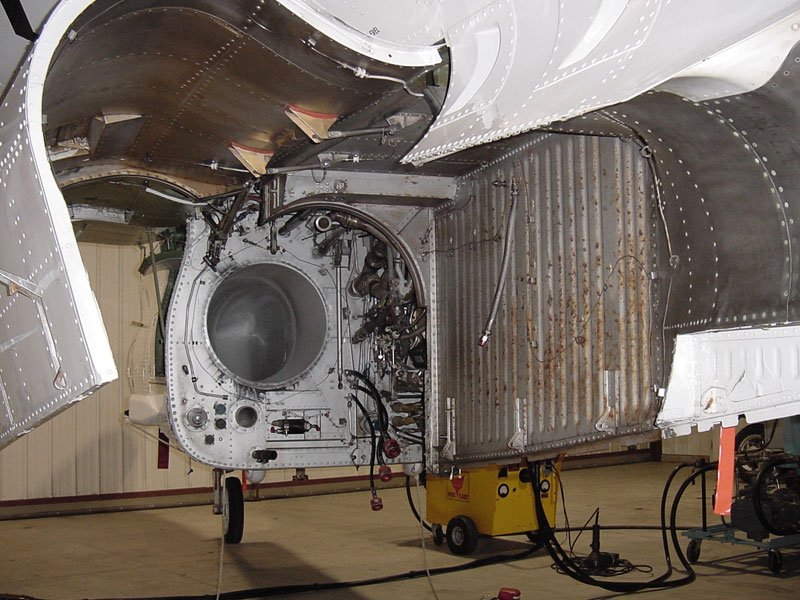
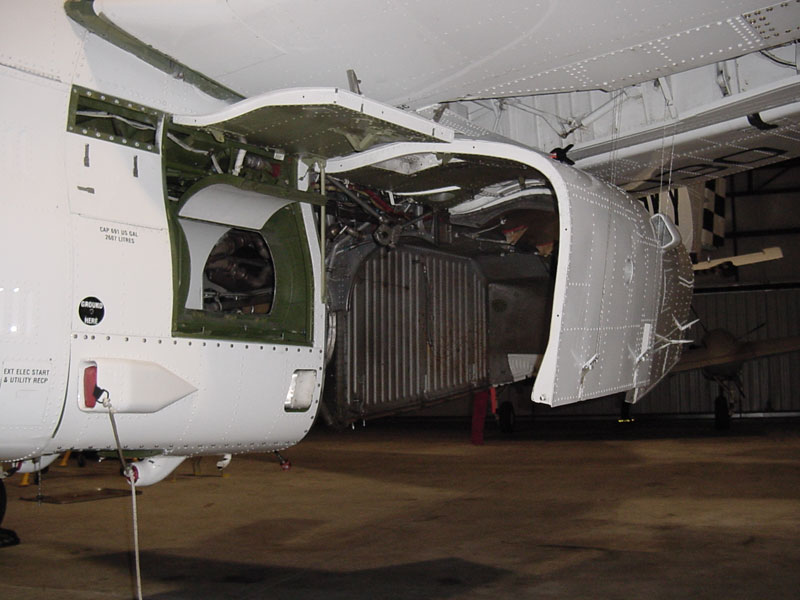
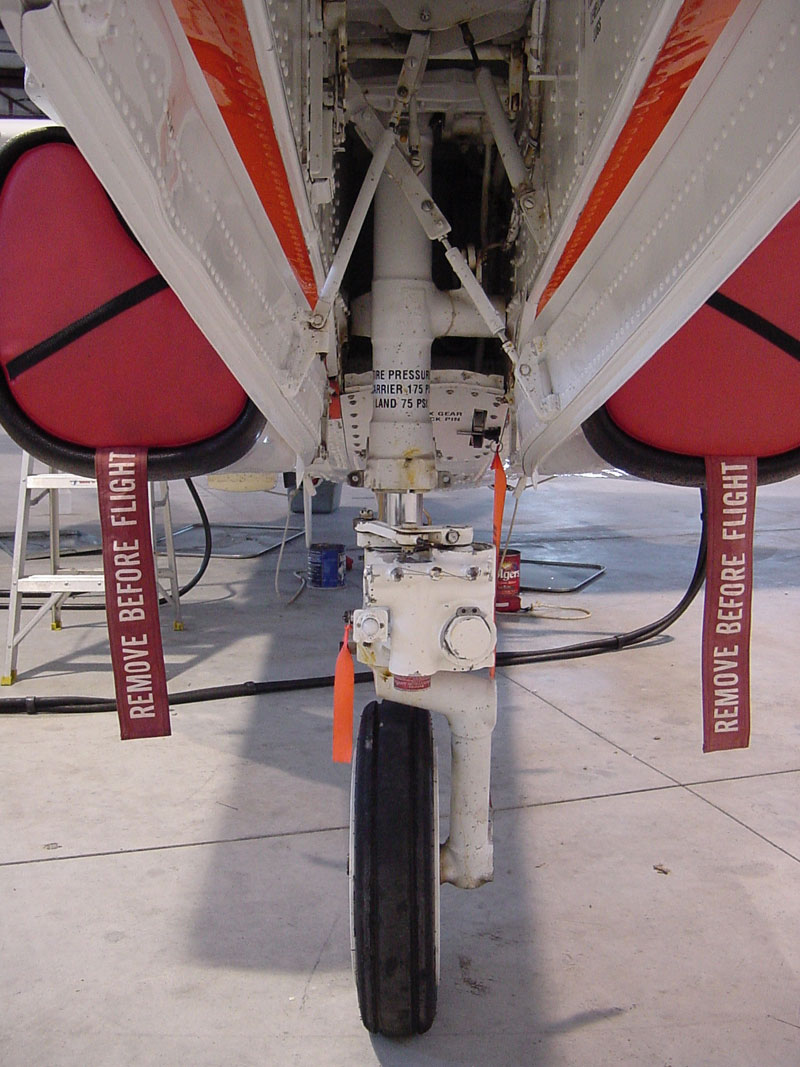
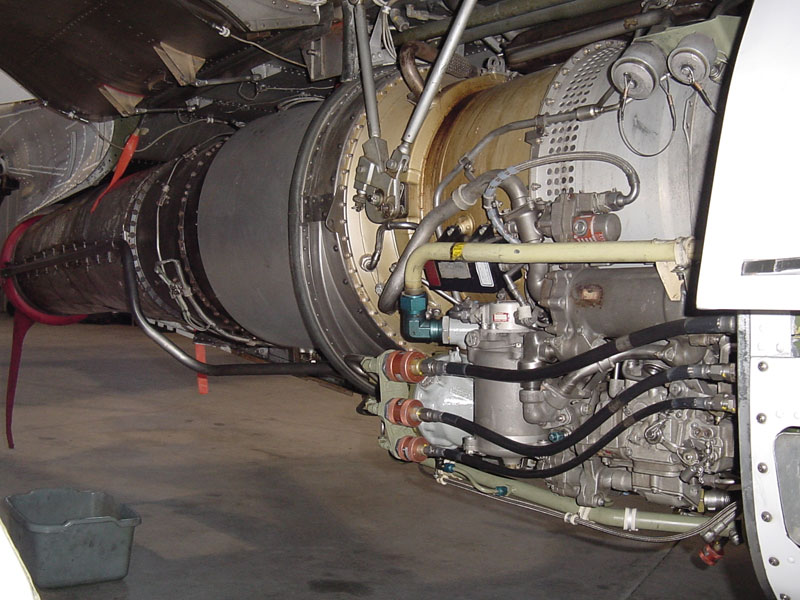
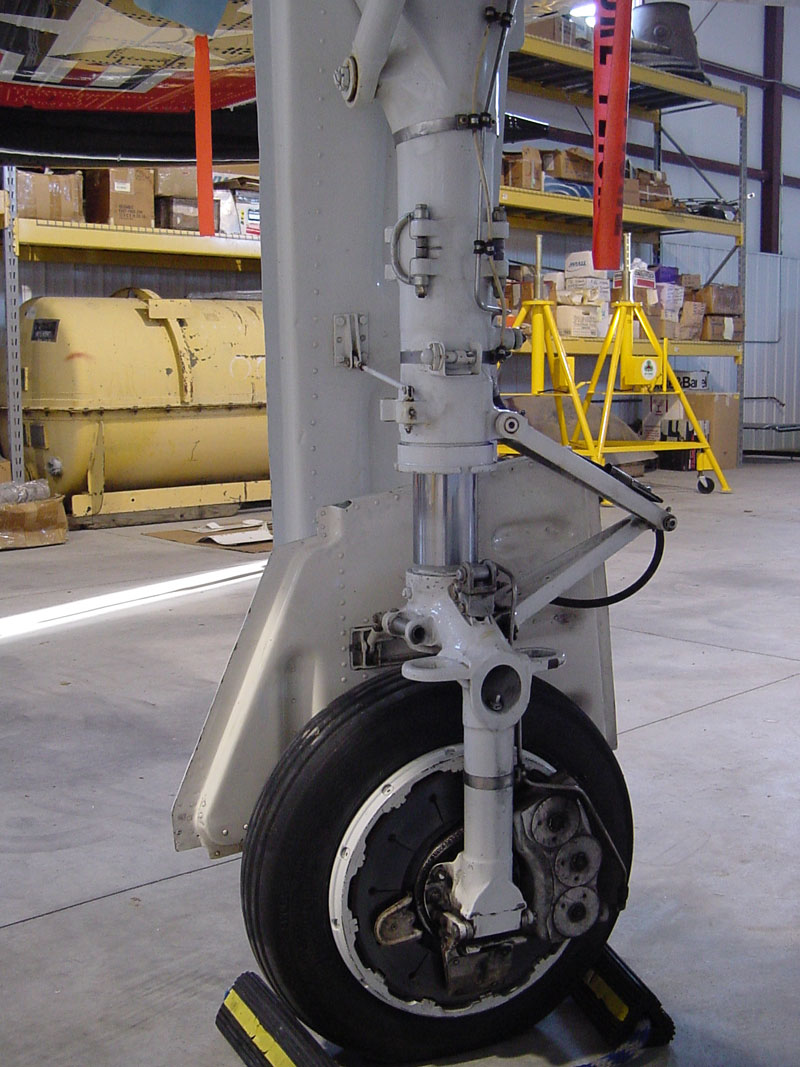
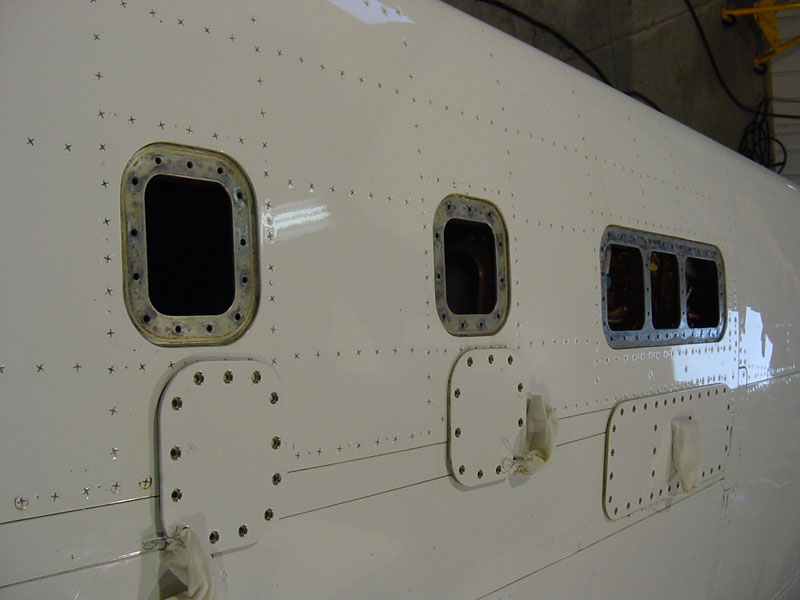
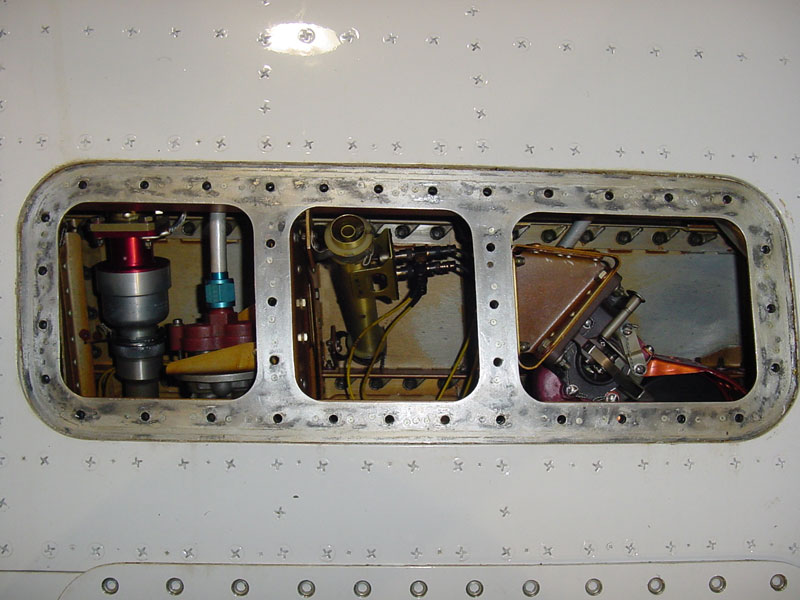
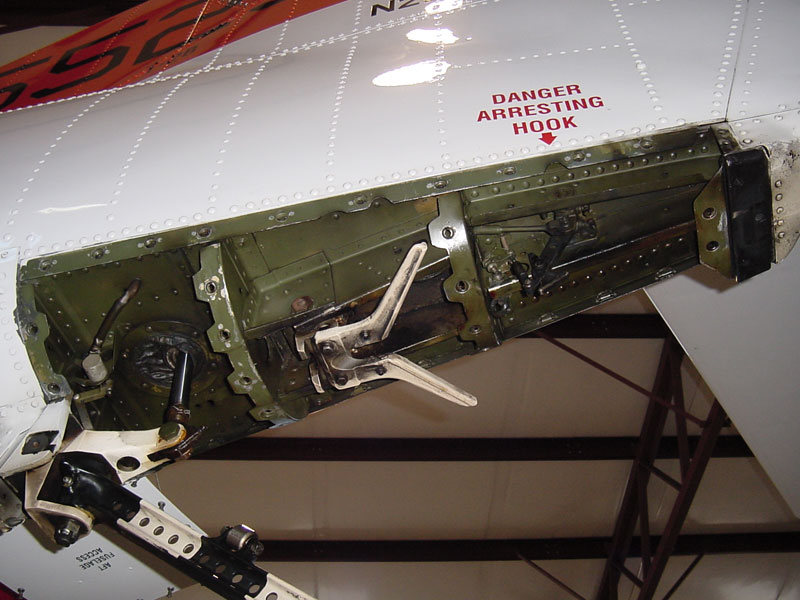
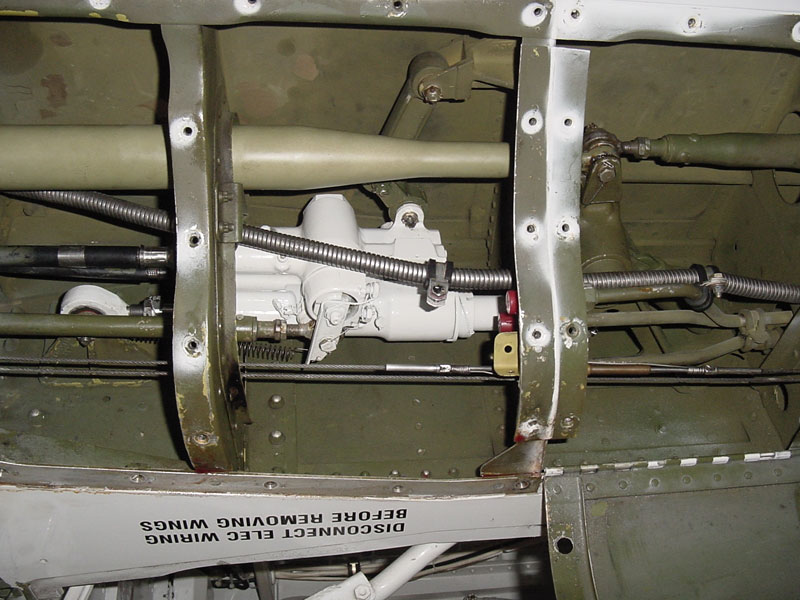
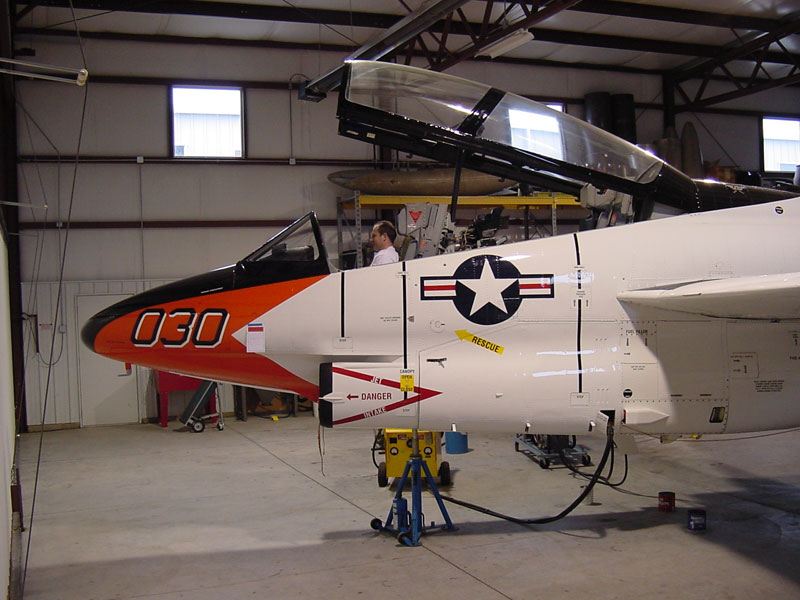
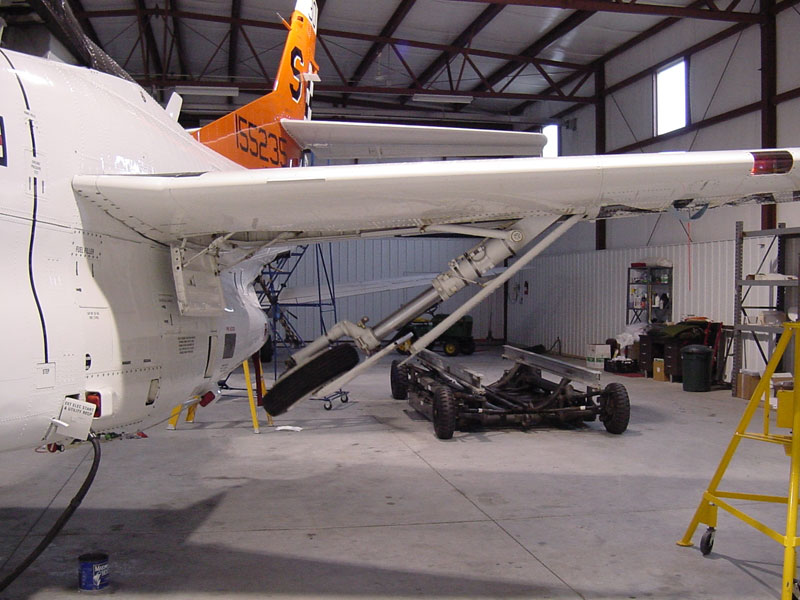
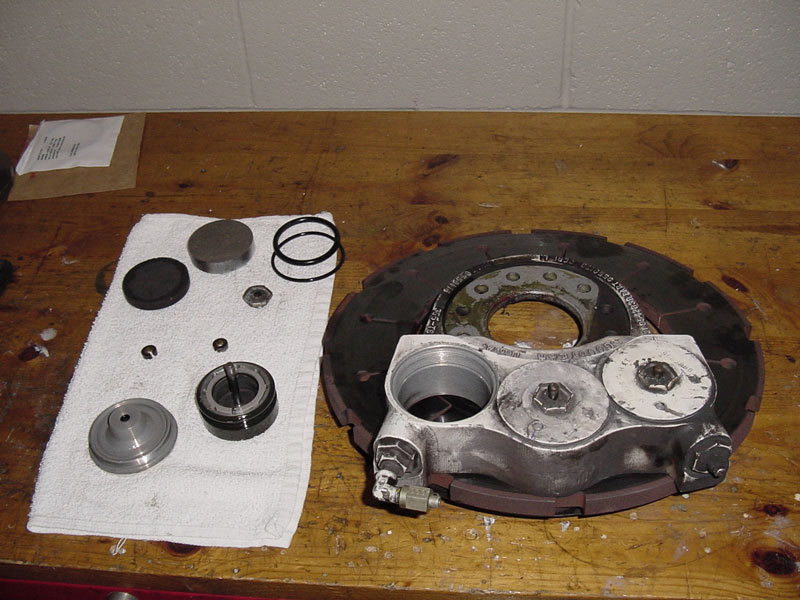
Maintenance Photos

AVAILABILITY
Our T-2B Buckeye is available for airshows and special events. For additional information, please contact us!